Parkinson’s Voice, Speech, and Quality of Life: Why Communication Deserves More Than “Speak Louder”
If you’re living with Parkinson’s disease, or caring for someone who is, you already know this truth:
Voice and speech changes can significantly impact daily life.
People ask you to repeat yourself.
Conversations feel exhausting.
Your voice fades before you finish a thought.
Over time, many people begin to speak less. Not because they have nothing to say, but because communicating feels hard and frustrating.
As a licensed Speech-Language Pathologist who has specialized in Parkinson’s disease for over 24 years, I have seen this pattern thousands of times. I have also seen how deeply it affects confidence, relationships, and overall quality of life. Often, these communication changes feel more limiting than the physical symptoms themselves.
Parkinson’s Voice Changes Are Common.
Reduced vocal loudness and decreased speech clarity are among the most common symptoms of Parkinson’s disease. They affect nearly everyone at some point. Yet they are frequently minimized or oversimplified.
Many people are told to “just speak louder” or “try harder.”
Some are referred to LSVT LOUD or traditional speech therapy programs that focus primarily on volume.
While approaches like LSVT LOUD have helped many individuals, loudness alone does not always translate into everyday communication. Patients often tell me they can be loud in therapy, but still struggle to be understood at home, on the phone, or in social settings.
The reason is simple.
Voice is not just a throat issue. It is a whole-body, whole-brain skill.
Why Speech Therapy Often Doesn’t Carry Over Into Real Life
Parkinson’s is a movement disorder, and speech is movement.
Breath, voice, posture, timing, and coordination are all controlled by the nervous system. When these systems are trained separately, gains often stay isolated to practice sessions and fail to carry over into real conversations.
This was the gap I saw again and again in my clinical work.
Patients worked hard in therapy, yet still felt unheard in daily life.
That gap is exactly why I developed Speak Steady.
Speak Steady: A Clinically Validated Speech Program for Parkinson’s
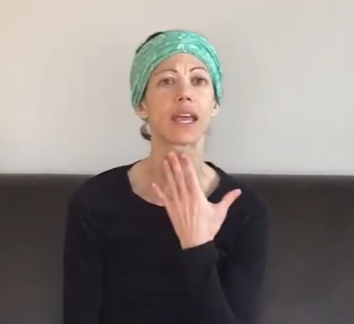
Speak Steady is a clinically grounded, movement-integrated voice and communication program designed specifically for people with Parkinson’s disease.
It is not a generic Parkinson’s exercise class.
It is not a wellness program.
And it is not simply LSVT LOUD delivered online.
Speak Steady integrates:
Evidence-based Parkinson’s speech therapy
Motor learning and neuroplasticity principles
Coordinated training of breath, voice, speech, and functional movement
Structured daily practice designed for real-world carryover
The goal is not louder speech in isolation.
The goal is clearer communication in everyday life.
Real-World Outcomes That Matter
In a real-world outcomes group of individuals using Speak Steady:
96% of care partners reported improved communication effectiveness
100% reported increased participation in daily life
100% reported improved vocal loudness
100% reported improved quality of life
One care partner shared: “My husband is a new person. We can understand him again, and his quality of life has improved 100-fold.”
These are the outcomes that truly matter. Not just how someone performs in therapy, but how they live.
Parkinson’s Exercise, Speech, and the Brain Work Best Together
Research continues to show that exercise improves Parkinson’s outcomes. Yet speech is often left out of Parkinson’s exercise conversations.
Speak Steady brings speech back into the movement discussion.
By training communication alongside gentle, purposeful movement and breath coordination, the brain learns speech the way it actually uses it. Dynamically, not in isolation.
This approach supports:
Stronger vocal initiation
Improved speech clarity
Less communication fatigue
Greater confidence and participation
Most importantly, it supports independence.
Designed for Real Life, Not Just the Clinic
Speak Steady is designed for:
Safe, guided at-home use
Daily consistency without overwhelm
People at different stages of Parkinson’s
Ongoing practice that fits into real routines
The program also supports mindset, motivation, and cognitive engagement, because communication is deeply connected to how we think, feel, and connect with others.
About the Founder
Jessica Ackerman, MS, CCC-SLP
Licensed Speech-Language Pathologist | Parkinson’s Specialist | Founder of Speak Steady
Jessica has spent more than 24 years working exclusively with individuals with Parkinson’s disease and movement disorders. She is also a Registered Yoga Teacher, Meditation Teacher, and Wellness Specialist, with advanced training in breathwork, nutrition, and whole-person health.
She has supported thousands of individuals and families, served as a long-time Parkinson’s advocate, cared for her own mother, and authored three published books focused on resilience, health, and living fully.
Speak Steady was created from decades of clinical experience and one core belief:
Your voice isn’t gone. It just needs the right kind of practice to come through clearly again.
Are you with me?
If you’d like guided, Parkinson’s-specific support for your voice and communication, you can explore Speak Steady here: Speak Steady Here.